Monday, 18 November 2013


Devon and Cornwall: into the depths of the Williams/Mills past
By Nanette (Mills) Bragg


By the rosy cliffs of Devon, on a green hill's crest,
I would build me a house as a swallow builds its nest;
I would curtain it with roses, and the wind should breathe to me
The sweetness of the roses and the saltness of the sea.


These words by Amelia Josephine Burr more than sum up the beautiful region of England from which several of our antecedents departed. During my sojourn there in July this year I was daily left asking “Why?” Why would anyone leave this beauty and why is there so little trace of a family that at the least seemed successful?

I had planned to travel to England to do some professional development for a course I teach; following that wonderful reunion in Waaia at Easter I was inspired to add a journey into Devon and Cornwall. I was determined to see if my actual presence there could break through barriers I had not surpassed on Ancestry.com.

My interest, with a maiden name of Mills and being a granddaughter of one of the triplets (Andrew), is clearly Williams and Mills; in Cornwall and Devon it was Williams all the way. It was in this south-western corner of the United Kingdom that the delightfully named Zenobia George was born; where she married not one but two younger men, and from whence she adopted an entirely new life and made Devon the land of her past: from here she journeyed to the antipodes with her second husband Thomas Williams.


6 Brook St, Tavistock
Zenobia's birth place
Zenobia was born to James and Mary George (Dury) at 6 Brook Street, Tavistock. The 1841 census implies that she had a twin brother, Thomas; they were both 15 and both actively employed. Thomas was in the mines and Zenobia appears to have been working in the wool industry; although the designation is unclear she appears to have an “F-G” next to her name and this usually means ‘Fullers Girl’; a fuller cleansed wool to prepare it for spinning or weaving. There is no real mystery about Zenobia, only her parents, and this is where I was able to use my time in Devon to the most affect.
Mary George, at the age of 42, is represented as ‘independent’ in the 1841 census. So where was James? Unfortunately, this is a question that remains unanswered, but there are some interesting things to note:

 
  • James was a tin dresser (according to Mary’s death certificate) – this occupation was one of many notoriously dangerous occupations in the mining industry in Cornwall; average age of death was 28 years – usually due to chronic lung conditions
  • However, there is no death certificate for a James George of the right age in Cornwall or Devon between the birth of Zenobia and Thomas and the 1841 census.
  • James and Mary married in 1817 and while they had one son in 1818 their other children were born in the late 1820’s – quite an extraordinary wait for the period. Did James travel? He certainly would have to have gone to Cornwall to dress tin.
  • Until 1828, ALL tin dressing was done in Cornwall and then the industry had a fairly spectacular collapse and tin dressing would no longer have been a viable occupation. However, James’ mining skills should have been useful at the many copper and manganese mines in Devon so he should not have needed to leave the family for work.


My search for James continues, but my search for Mary was successful due to the incredibly helpful Cemetery Officer from Tavistock Council. I was aware that there was a non-conformist cemetery in Tavistock and, considering the tendencies of the Williams’ to be religious non-conformists in Australia I suspected I might find them there. I made my way to the Dolvin Road Cemetery and began a hands-on search; unsurprisingly, between the heat, waist high grass and weeds and centuries old headstones I was unsuccessful.
Dolvin Road cemetery before its haircut …
 
The George family headstone,
after the weeds had been removed
I returned to my roots of being a history teacher; what do I tell my students? There’s always a record somewhere … in Devon the council is well-equipped with both records and incredibly helpful employees. My one simple request to find if Mary was indeed buried at Dolvin Road led to a delightful small army of men armed with whipper snippers journeying to the cemetery, providing me with a brief lecture on the bizarre grid numbering system used at the cemetery, and then literally unearthing not only Mary’s grave but that of several of our forebears. It is unfortunately in bad condition, having broken into three pieces and laid flat on the grave.


As you can see from my facsimile, there was lots of information on the gravestone. Henry, born in 1818, looked after his mother in her old age. The 1871 census tells us he was a Mine Agent; an important and well paid job and he actually lived in a house supplied by the Mines authority. As you can see from their ages at death, apart from Henry’s first wife, the Williams’ clan tended to long life in an age when 46 was the average life expectancy.

I was overjoyed with that find and considered it the highlight of my couple of days searching, but there were other gems to be experienced. The beautiful River Tamar at Gunnislake where Zenobia and Thomas lived before departing for Australia; Tavistock Parish church where Zenobia and Thomas were married, the lovely house on Brook Street, the River Tavy and the township of Tavistock that was central to so much Williams and George activity. I rouse on my students for using too many superlatives, so I won’t start; I will recommend that if you ever have the opportunity to experience this pearl of the world then take it. If you have time to plan join the Devon Family History Society – they will laugh if you say you’re seeking Williams in Devon and Cornwall (it’s a very common surname in that corner of the world) but they are extremely helpful and have amazing resources.

So to my first question, why leave? As noted, the tin mining industry in Cornwall died in 1828, but this was not the end for the region – there were plenty of mines and plenty of opportunities for diversifying into copper, manganese, arsenic etc… the industrial revolution needed to be fuelled and this region provided every single necessary ore and mineral, except coal. The region remained strong in mining until the 1890’s, but from the 1850’s there was a concerted effort to encourage skilled workers to try their hand in the new regions beginning to boom; one of these was Australia. Assisted fairs were affordable to a reasonable number; often churches aided in payment of these schemes, particularly non-conformist churches, as they too wanted to spread their influence, but even the unassisted immigration scheme did not require an arm and a leg to afford. The Cornish diaspora began with the urging of a weakening economy and a promise of a stable future, albeit on the other side of the world. It is estimated that up to 250 000 Cornish miners and their families, as well as other tradesfolk who grasped the opportunities, emigrated between 1860 and 1900. We know that Thomas Williams was a copper miner, so perhaps my question is answered.

We must remember that in the midst of its industrial might the area would not have been quite as pretty as it is now; the landscape would have been scarred and pock-marked and the air would be rank with the detritus of the mining process. Perhaps Thomas and Zenobia were not turning their back on the beauty that Cornwall and Devon had to offer; but turning their face towards the beauty and splendour of a new life and new opportunities in this unique and beautiful land of ours.
 
The River Tamar at Morwellham Quay;
a copper mining site near Tavistock
The wheel remains at the mine at
Morwellham Quay


Saturday, 16 November 2013

Extended Reunion reports by family members


Christmas Present Ideas

2014 HWMT Reunion Calendar


Limited stock of the 2014 HWMT Reunion Calendar is only $15.00


HWMT's HWMT 2014 Calendar album on Photobucket

 Please note orders must be in before 1 December to be delivered in time for Christmas.


Family Wall Charts


Some charts will need photos to be added, but if you get me the photo's I will add them.


Charts can be laminated.

Prices will depend on size, quantity and if you want it laminated.


Jigsaw Puzzles


We have some great family photo old and new, place of family interest - like the old Waaia pub where the Mills triplets where born or the old Mills house, the stable at Atholdale or the gates.

You choice the photo.

A4 - $25
A3 - $30

Please note orders must be in before 1 December to be delivered in time for Christmas.


Canvas

These are the Canvass that I got done for the reunion.

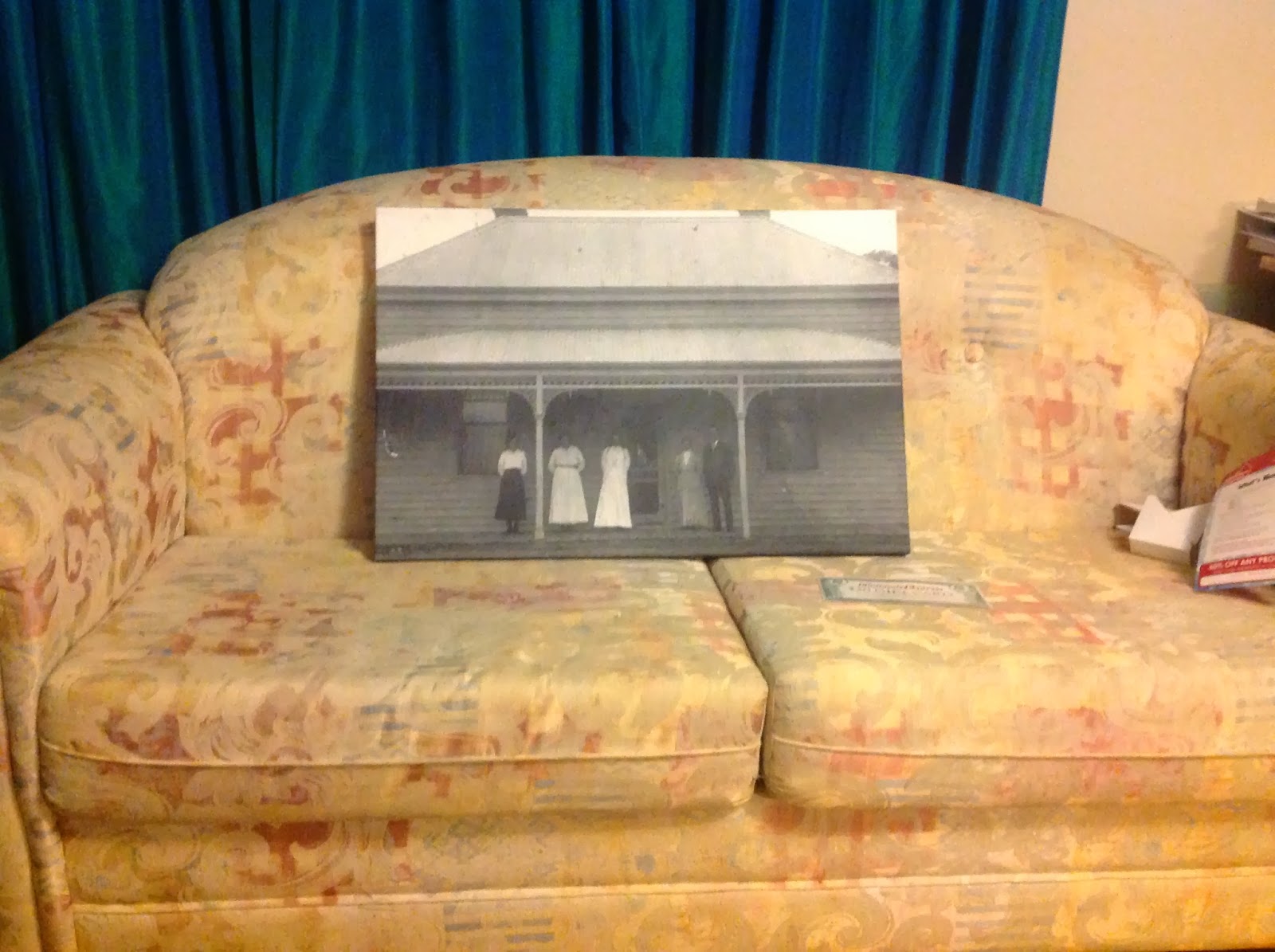
George & Elizabeth (Mills) Williams family

Mills farm house

Stable at Atholdale (Williams farm)

George & Elizabeth (Mills) Williams

Thomas & Thirza (Williams) Mills

You choose the photo from the many that we have


Canvas 30x30cm – $35
Canvas 50x50cm – $45
Canvas 75x50cm – $55
 
 
 Please note orders must be in before 1 December to be delivered in time for Christmas.

Photos of the reunion on 8G USB - $15.


If your interested in any of these please contact Ben Williams - benwilly@bigpond.com or
0419 946 866, 03 9560 1800


Friday, 27 July 2012

Accomodation

The Committee are in negations with the Waaia Football Club to allow people to camp at the grounds on the weekend.

We would encourage you to book early to ensure you are able to get a room.

Numurkah
El Toro Motel  142-146 Melville St Numurkah (03) 5862 1966
Numurkah Caravan Park 158 Melville St Numurkah (03) 5862 1526
Nathalia
Nathalia Motel and Holiday Park Cnr Murray Valley Hwy and Manifold St Nathalia (03) 5866 2615 
Strathmerton 
Strathmerton Gazebo Motor Inn 84 Murray Valley Hwy Strathmeton (03) 5874 5303
Cobram / Barooga
Charles Sturt Motor Inn 31 Mookarii St Cobram (03) 5872 2777
Sportsmans Motor Inn Cnr of Golf Course Road and Burkinshaw Street,   Barooga (03) 5873 4444
Bullanginya Lodge 7 Banker St Barooga (03) 5873 4735
Cobram Colonial Motor Inn  Cnr Murray Valley Hwy & William St Cobram (03) 5871 3346
Shepparton
Wyndhamere Motel  65 Wyndham St Shepparton (03) 5821 5002
Big Valley Lakeside Paradise  564 Wyndham St Shepparton (03) 5821 3666
Overlander Hotel-Motel  97 Benalla Rd, Shepparton (03) 5831 5248
Tudor House Motor Inn  64 Wyndham St, Shepparton (03) 5822 0945
Tirana Motor Inn  33- 37 Wyndham St Shepparton (03) 5831 1766
Peppermill Inn Hotel Motel  7900 Goulburn Valley Hwy, Shepparton (03) 5823 1800
Pines Country Club Motor Inn  103 Numurkah Rd, Shepparton (03) 5831 2044
Sherbourne Terrace Quality Hotel  109 Wyndham St Shepparton (03) 5821 4977
Paradise Lakes Motel  7685 Goulburn Valley Hwy Shepparton South  (03) 5823 1888
The Carrington  505 Wyndham St,  Shepparton (03) 5821 3355

Thursday, 5 April 2012

Harvey Family

<>
<>
<>
Zenobia George
William & Zenobia Harvey


Zenobia George, the daughter of James George & Mary Dury born in 1826, Plymouth, England married William Harvey on the 26 January 1848 in Plymouth.  William was born 1827 also in Plymouth.  His father was Isaachar Harvey, mother unknown.


In the 1851 English censis William is listed as a copper miner.


William & Zenobia Harvey had 3 children.  William Henry Havey born 1849, Henry George Harvey in 1852 and Thomas George Harvey in 1853.


In 1859 Zenobia then married Thomas Williams.  It is not know what happened to William Harvey, we assume he died. It is interesting to note at the same time Thomas Williams is also listed as a copper miner on the English censis. 


Zenobia & Thomas Williams had 3 children and in January 1866, Zenobia & Thomas, 3 Harvey boys and 3 Williams children left London for Australia.  They arrived in Auckland, New Zealand  26 July 1866.  Later that year in October the 4th child of Zenobia & Thomas was born.  Louisa was born at Great Barrier Island, New Zealand.  It is interesting also to note that there was a copper mine there.


It is not known when the family came to Australia but William Henry Harvey was married in Australia in 1872.


William Henry Harvey


William Henry Harvey the first son of Zenobia & William Harvey was born in 1849 in Devon, England.  He came to Australia with the rest of his family via New Zealand.


He married Caroline Agnes Cahile on the 21 August 1872 at the age of 23.  Caroline was the daughter of Frank Cahile & Lucy Finucane.

In 1891 they had a daughter Lucy Zenobia Harvey in Chewton, Victoria.  William was listed as a minor at the time.

William died on the 21 August 1923 at Praham, where they lived for some time.

Lucy was a school teacher and died on the 25 September 1931 at the age of 40.  She did not marry or have any children.

<><>
Caroline Harvey (in black) with the Williams about 1934
Caroline died 18 June 1939 at Cheltenham.  All three are burried together at the Brighton Cemetry in an unmarked grave.


Henry George Harvey


<><><><> <><><><>
Henry George Harvey
<><><><> <><><><> <><><><>
Ann Watts


Henry George Harvey the Second son of Zenobia & William Harvey was born in 1852 in Devon, England.  He came to Australia with the rest of his family via New Zealand.


Henry married Anne Watts on the 1st January 1885 in Orange, New South Wales.  Anne Watts was the daughter of James & Margaret Watts of Camperdown, Victoria.  Anne was born in 1860 in Camperdown.


Henry & Anne Harvey had 6 children as follows:


Francis Lousia born 18 May 1886 in Orange.  She died 1898 in Corcoar, NSW from a mining accident.
Ethel Anne born 9 October 1888 in Tuena, New South Wales.
Zenobia Caroline born 1891 in Carcoar, New South Wales.
Henry George born 1894 in Carcoar, New South Wales.
William Arthur born 1898 in Carcoar, New South Wales.
Stella Vera born 7 July 1905 in Cobar, New South Wales.


Henry was a miner and died 16 Febuary 1911 in Cobar, New South Wales.  Anne died 18 November 1934 in Temora, New South Wales.


Thomas George Harvey


Thomas George Harvey the third son of Zenobia & William Harvey was born in 1854 in Devon, England.  He came to Australia with the rest of his family via New Zealand.


Thomas married Sara Ann Jacobs on the 3 January 1874.  Sara was the daughter of William Jacob & Sarah Milligan.  She was born on 28th February 1854 in Goldern Square, Victoria.


Thomas was killed in a mining accident on the 20th June 1889 in White Hills, Victoria.


Thomas & Sara had 4 children as follows:


Thomas George born October 1874 in Long Gully, Victoria and died 11th April 1875 in White Hills.
Elizabeth bron 1876 in Long Gully, Victoria.
Thomas George born 1881 in Long Gully, Victoria
Emily Louisa born 1883 in Long Gully, Victoria.


Sara died 24th April 1924 in White Hills, Victoria.


Wednesday, 4 April 2012

Williams Family

Thomas & Zenobia Williams


Thomas Williams
Zenobia George
Thomas Williams was born in Tavistock, Devon in about 1837, the son of George and Mary (Tapson) Williams.


Thomas became a miner, and in 1859 he married Zenobia Harvey, a milliner and dressmaker who was the widow of William Harvey. She was born about 1826, and was the daughter of James and Mary (Dury) George of Plymouth. Zenobia had three sons from her first marriage: William, Henry and Thomas Harvey.

Thomas and Zenobia Williams had a son, George (1859) and two daughters, Thirza (1861 at Gunnislake, Cornwall) and Emma (1853 at Latchly, Calstock).

Thomas and Zenobia, their three children and Zenobia's three sons left London, England on 25 February 1866 on the 'Monarch'. The ship was unfit to sail and, after 42 days, was docked at Rio. The second officer deserted the crew and Thomas was 'engaged to supply his place'. They docked in Auckland on 26 July 1866. Louisa, their third daughter, was born in October 1866 at Great Barrier Island.

The first record we have of them in Australia is an application dated February 16, 1877 for 320 acres of land, Allotment 53, Section C, in the Parish of Ulupna, County of Moira. Thomas gave his occupation as a miner of Alabama, Long Gully, Sandhurst, and stated that he owned one quarter of an acre there.

The licence was granted on 1 June 1877 and they moved onto the block in November, 1877. By 1878, they had built a log house with an iron roof, put up one mile of first class chock and log fencing, grubbed 23 acres and ringbarked 40 acres of trees. They had also built dams and cropped 20 acres of the land.

The following year they built two sheds and a dairy, and cropped 46 acres, as well as doing more grubbing and ringing. The lease was granted on 1 June 1880.

Thomas died in November 1882 in Melbourne, and is buried in Melbourne General Cemetery. The lease of the property was transferred to Zenobia in 1894, who immediately transferred half to her son, George, and leased the other half to him. Zenobia owned a house in Waaia and we presume she retired there until she went to live with her daughter, Thirza, at Nagambie, where she died in 1905. She is buried in Nagambie Cemetery. On Zenobia's death, her half of the farm passed to Thirza, who transferred it to George.


George Williams


George & Elizebeth (Mills) Williams
George Williams was the only son, and eldest child of Thomas and Zenobia Williams. He was born at Tavistock, Devonshire, England, on 29 December 1859 and came to Victoria via New Zealand, arriving around 1866. He came to Ulupna when his parents selected a 320 acre farm in 1877. This farm was called 'Atholdale'. After his father, Thomas, died in 1894 the title of the land was transferred to George. He married Elizabeth Mills in 1885 and they had 8 children; 7 girls and 1 boy.


George and Elizabeth attended the Yalca South Methodist church, where George was the choirmaster. The first house built on 'Atholdale' was flooded, so they moved to another spot, near the centre of the farm, but that was burnt down one night. The only thing saved was the wheat cheque that was in George's trouser pocket. Neighbours, half a mile away, didn’t know about the fire for 2 weeks because there was so much bush around. The next house was built midway between the two previous sites, where George & Elizabeth lived until they retired to Tocumwal Road, Numurkah in 1922. The road was also known as "Blink Bonnie". George died on 8 April 1924 in Numurkah.


Elizabeth (Lizzie) was born at Beckworth, the sixth child of Robert & Ellen (Adam) Mills and lived with her parents at Caralulup, until they came to Waaia about 1880. She was a needlewoman, making clothes for her many grandchildren. She crocheted many doyleys, giving each of her granddaughters a fine selection of crochet work for their 21st birthdays. She was able to continue this hobby until 6 months before her death, on 26 March 1954, at the great age of 93 years.


Sis Patten, Edith Girdler, Murial Mills, Ethal Sizer,
George Williams, Clarice Laker, Amy Amos & Lily Amos


Thirza Willimas


Emma Williams


Louisa Williams

Lousia Williams


Lousia the forth child of Thomas & Zenobia Williams was born in October at Great Barrier Island. Her family had left London, in January that year to come to Australia.  It is believed that they may have went to Great Barrier Island to have Lousia and escape the Maori wars in New Zealand. Great Barrier Island may have been a safe haven but also had a copper mine on it and Thomas was listed as a Copper Miner on Louisa Birth Certificate.


Joseph Henry Baldwin at the age of twenty, while working as a contractor at Yalca, met and married Louisa Williams in 1889. Their fisrt child, Albert Victor was born at Barwo in 1889 and lost his life while serving with the AIF in France in 1917. Arthur born at Numurkah in 1891 married Elizabeth Sharp. Florence born 1894, married Edga Barrass, Joseph Leslie born 1896 at Barwo married Ellen Tuck. Ernest born 1899 at Barwo married Amy McNair and Archie born 1901, married Daisy Tuck.

Joseph left his family and went to Western Australia to live, where he is believed to have died a pauper. Louisa had a small property planted with fruit trees on the Broken Creek at Barmah East. With the help of her two eldest sons, they farmed and milked seventy cows on shares with the Wright family. The milk was separated and cream taken to Picola Railhead to go to Numurkah Butter Factory.

Louisa's two oldest sons took up farming on the shares with draught horse teams. They eventually sold out at Barmah East and took up two blocks of land opened up by the NSW Government for closer settlement at Barooga.

Louisa died at Mooroopna in 1924 and is buried in Cobram Cemetery